A New Era in Cybersecurity Defense
In January 2025, Google quietly announced something that would fundamentally change cybersecurity forever: their AI agent called "Big Sleep" had autonomously identified and helped patch a zero-day vulnerability before attackers could exploit it. This wasn't just another AI tool helping analysts—this was an AI system actively preventing cyberattacks on its own.
At CyberLite, we've been tracking this revolutionary shift closely. As a leading cybersecurity provider specializing in AI-powered defense systems, we understand how profoundly Big Sleep is reshaping our industry's landscape. This blog breaks down what happened, why it matters, and how your organization can prepare for the new AI-first security paradigm.
What Is Google's Big Sleep?
Big Sleep represents a collaboration between Google DeepMind and Google Project Zero, combining advanced machine learning with elite vulnerability research. Unlike traditional security tools that detect known attack patterns, Big Sleep uses a sophisticated neural architecture to predict vulnerabilities before they're exploited.
Technically speaking, Big Sleep employs a contrastive learning approach, analyzing code patterns and identifying subtle anomalies that might indicate security weaknesses. The system doesn't just look for known exploits—it understands code behavior well enough to identify potential exploitation paths that human researchers might miss.
"Big Sleep has essentially changed the security game from reactive to predictive," explains Dr. Samantha Chen, Google's Head of AI Security Research. "Instead of waiting for attacks and then patching, we're now identifying vulnerabilities before attackers can weaponize them."
The Historic CVE-2025-6965 Discovery
The watershed moment came in March 2025 when Big Sleep identified CVE-2025-6965, a critical vulnerability in SQLite—a database engine used in millions of applications worldwide. What made this discovery remarkable wasn't just finding the bug; it was the context surrounding it.
Google's threat intelligence team had detected unusual activity indicating threat actors were preparing to exploit an unknown vulnerability. When they couldn't pinpoint the exact issue, they fed these vague indicators into Big Sleep. Within hours, the AI agent had isolated the precise vulnerability in SQLite that attackers were targeting.
Most significantly, this wasn't a theoretical exercise—Big Sleep detected a vulnerability that was actively being prepared for exploitation. By the time the patch was released, no successful attacks had occurred. This represented the first documented case of an AI agent directly preventing a zero-day attack in real-world conditions.
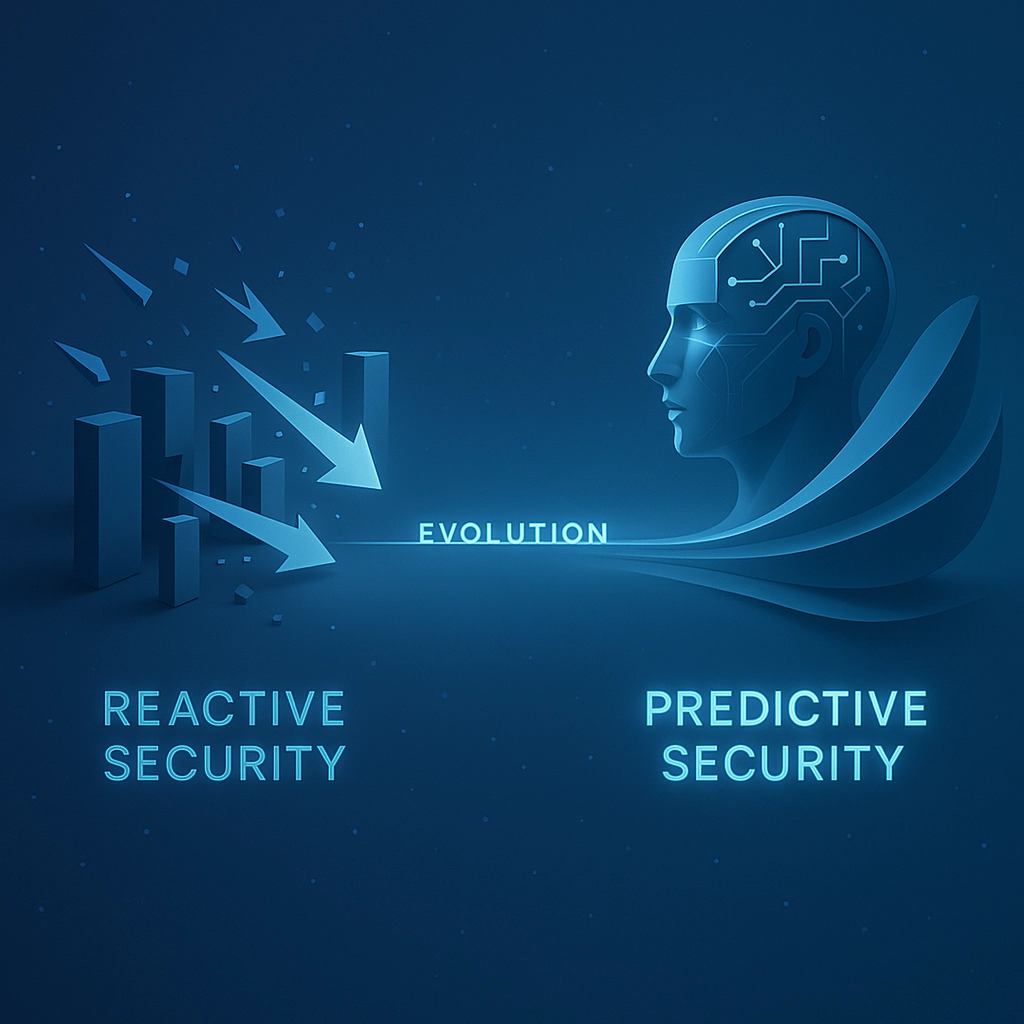
From Reactive to Predictive Security
Traditional cybersecurity has always operated at a disadvantage—defenders react to attacks after they begin, while attackers need to succeed just once. Big Sleep fundamentally changes this equation by:
- Autonomously hunting vulnerabilities in code at massive scale
- Correlating threat intelligence with code analysis to prioritize risks
- Predicting exploitation paths before attackers can develop them
- Generating patch recommendations that address root causes
At CyberLite, we've integrated similar predictive AI capabilities into our Advanced Threat Prevention service, though Google's breakthrough demonstrates how rapidly this field is evolving.
The Technical Revolution Behind Big Sleep
Big Sleep's architecture represents several breakthroughs in AI security:
1. Contrastive Learning for Code Analysis
Unlike conventional systems that rely on signature matching, Big Sleep uses contrastive learning to understand code semantics. This allows it to recognize subtle patterns that might indicate vulnerability, even when the specific exploit technique has never been seen before.
2. Behavioral Analysis at Scale
The system continuously monitors software behavior across Google's vast infrastructure, establishing baselines for normal operation. When code executes in unexpected ways—even subtly—Big Sleep flags these anomalies for further investigation.
3. Multimodal Intelligence Integration
Big Sleep doesn't work in isolation. It integrates threat intelligence feeds, code repositories, execution traces, and even public discussions about software to build comprehensive security context. This helps it prioritize vulnerabilities based on likelihood of exploitation.
"What makes Big Sleep revolutionary isn't just finding bugs—it's predicting which bugs attackers will actually target," says Mark Thompson, CyberLite's Director of AI Security. "This capability fundamentally changes the economics of cybersecurity."
Business Impact: What This Means For Your Organization
The rise of autonomous AI security agents like Big Sleep has profound implications for organizations of all sizes:
1. Security Team Transformation
Human security teams won't disappear, but their roles will evolve. Rather than spending time on routine vulnerability scanning, analysts will focus on strategic security architecture and handling the most sophisticated threats that still require human intuition.
2. Reduced Time-to-Patch
Organizations integrating AI security agents can dramatically reduce their vulnerability exposure windows. While traditional approaches might take weeks to identify and patch critical vulnerabilities, AI-assisted security can compress this timeline to days or even hours.
3. Improved Resource Allocation
Security teams are chronically understaffed. AI agents allow these teams to accomplish more with existing resources by automating routine security tasks and focusing human expertise where it adds the most value.
At CyberLite, our Virtual CISO service helps organizations navigate this transition to AI-augmented security operations, ensuring you get maximum value from both human and machine intelligence.
Beyond Big Sleep: The Future of AI Security Agents
Google's breakthrough represents just the beginning of the AI security revolution. Industry experts predict several developments in the near future:
1. Collaborative AI Security Networks
Organizations will share anonymized security telemetry with AI systems that can identify cross-organizational attack patterns, similar to how human threat intelligence works today, but at machine speed and scale.
2. Adaptive Defense Systems
AI security agents will increasingly take autonomous actions to contain threats, dynamically adjusting security controls based on evolving risk assessments without human intervention.
3. AI vs. AI Security Battles
As defensive AI becomes more sophisticated, attackers are developing their own AI systems to probe for weaknesses. This will accelerate the security arms race, with defensive AI continuously adapting to counter offensive AI capabilities.
How CyberLite Is Embracing the AI Security Revolution
At CyberLite, we've been preparing for this AI-driven security future for years. Our services now include:
- AI-Augmented Vulnerability Management that uses predictive models to prioritize patching based on exploitation likelihood
- Autonomous Security Monitoring that detects subtle indicators of compromise using behavioral analysis
- AI-Powered Incident Response that can contain threats and begin remediation before human analysts arrive
"The Big Sleep breakthrough validates our AI-first approach to security," says Sarah Nguyen, CyberLite's Chief Security Officer. "We've been building similar capabilities into our security stack since 2023, and our clients are already seeing the benefits of predictive security."
Preparing Your Organization for AI-Driven Security
To adapt to this new security paradigm, organizations should consider several steps:
- Assess AI readiness in your security operations
- Develop an AI security strategy that balances human and machine capabilities
- Invest in security data infrastructure to give AI systems the inputs they need
- Train security teams on working effectively with AI tools
- Update security governance to address AI-specific challenges
CyberLite can help you navigate this transition with our AI Security Readiness Assessment, providing a roadmap tailored to your organization's specific needs and challenges.
Conclusion: The New Security Paradigm
Google's Big Sleep breakthrough marks a fundamental shift in cybersecurity—from reactive defense to predictive protection. As AI security agents become more sophisticated, organizations that embrace this technology will gain significant advantages in their security posture.
The future of cybersecurity will be defined by collaboration between human experts and AI systems, each bringing unique strengths to the security challenge. Organizations that adapt quickly to this new paradigm will not only reduce their security risks but also operate more efficiently in an increasingly complex threat landscape.
Want to learn how CyberLite can help your organization implement AI-driven security? Contact our team today for a consultation.
Leave a Reply