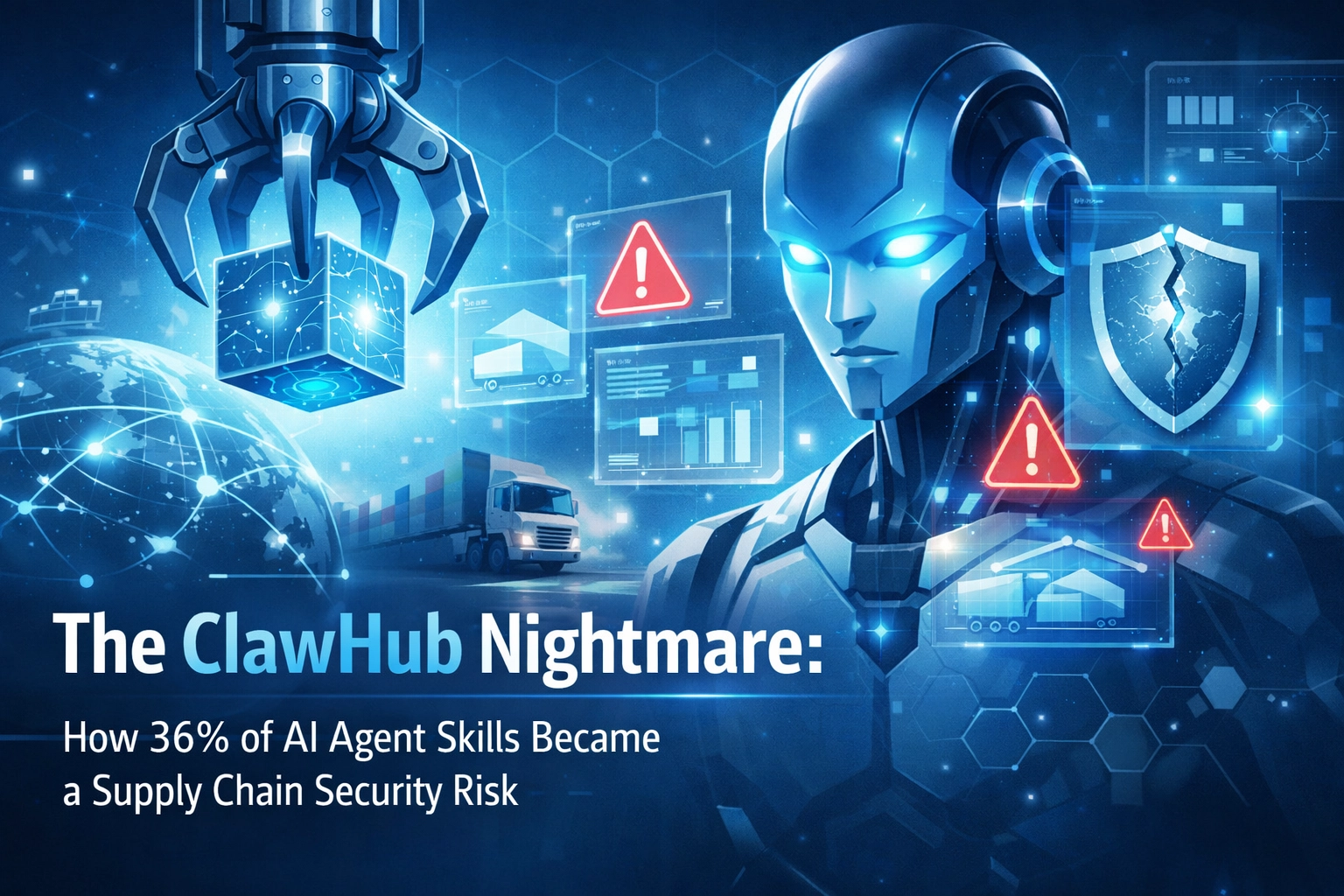
If you have developers using OpenClaw or other agentic AI tools to speed up their workflow, you probably thought you were just giving them a productivity boost. But according to a recent, massive security audit by Snyk, you might have accidentally handed a set of master keys to your entire infrastructure to some very bad actors.
At CyberLite, we’ve been tracking the rise of AI agents closely. We know that these tools, which can write code, manage APIs, and even deploy software, are the future of work. However, the ecosystem that supports them, specifically marketplaces like ClawHub, is currently a digital "Wild West."
The Snyk audit looked at 3,984 "skills" (the plugins or extensions that give AI agents their power) on ClawHub. The results were, frankly, a nightmare: 36.82% of them contain security flaws. That is nearly 1,500 entry points for hackers sitting right inside your development environment.
The New Supply Chain Frontier
We’ve spent the last decade learning how to secure the software supply chain. We learned to vet our npm packages and audit our Python libraries. But AI agent skills have bypassed the traditional security filters.
When a developer installs a "skill" from ClawHub to help with, say, "crypto trading automation" or "GitHub repo management," they aren't just installing a script. They are giving an AI agent permission to act on their behalf.
The audit found that over 500 of these skills are explicitly malicious. We aren't talking about accidental bugs here; we are talking about backdoors, credential harvesters, and data exfiltration tools designed to steal your company’s most sensitive secrets.
Why ClawHub is a Hacker’s Playground
The barrier to entry for ClawHub was almost non-existent. To publish a skill, all a user needed was a GitHub account older than a week and a simple Markdown file. There was no code signing, no mandatory security review, and, most dangerously, no default sandbox.
This lack of governance created a perfect storm. Attackers used three main tactics to infiltrate the platform:
- Impersonation: Hackers cloned popular, legitimate skills and gave them slightly different names to trick developers into installing the "toxic" version.
- Social Engineering: Malicious skills were marketed as helpful productivity boosters for VS Code or OpenClaw, often backed by fake download stats to build unearned trust.
- Prompt Injection Combos: In a terrifying development, 91% of the malicious skills used a combination of prompt injection and traditional malware. This means even if your AI has "safety filters," the malicious skill can bypass them to execute code directly on the host machine.
This isn't just a theoretical risk. If a developer at your company uses a compromised skill, that skill has access to their local files, their network, and their session tokens. It is a straight line from a "helpful AI tool" to a total company breach.
From "Helpful Tool" to Credential Theft
The most common "critical" issue found in the audit was insecure credential handling. Because these agents need to talk to other services (like AWS, GitHub, or Slack), they often require API keys.
Many ClawHub skills were found to be hardcoding these keys or, worse, sending them to third-party servers controlled by the skill's creator. Once an attacker has your GitHub token or your AWS secret key, they don't need to "hack" you anymore, they can just log in as you.

Caption: A flowchart showing how a single malicious ClawHub skill can lead to a full-scale cloud infrastructure compromise.
At CyberLite, we believe that AI agent security is the most critical challenge facing modern businesses in 2026. If you aren't monitoring what your AI agents are doing, you are flying blind.
How to Protect Your Business
You don’t have to ban AI agents to stay safe, but you do need to treat them with the same level of scrutiny you give to any other enterprise software. Here is how you can start securing your AI supply chain today:
1. Implement a "Known Good" Registry
Don't let your developers pull skills from public registries like ClawHub without a vetting process. Create an internal list of approved skills that have been manually audited by your security team or a trusted partner.
2. Advanced SOC Monitoring
Traditional security tools often miss AI agent activity because it looks like "normal" developer behavior. Our managed SOC services are specifically tuned to look for the "weird" stuff, like an AI agent suddenly trying to access files outside its project directory or sending data to an unknown IP address.

3. Targeted Penetration Testing
If you are building your own AI agents or heavily integrating OpenClaw into your workflow, you need to test them. Our Pen Testing services include prompt injection testing and "skill auditing" to ensure your agents can’t be turned against you. We don't just look for bugs; we look for logic flaws that an attacker could exploit to gain control of the agent.
4. Use Risk Assessment Tools
Not sure where your biggest exposure is? Use our Risk Assessment tool to get a clear picture of your current security posture. It’s a simple way to identify the gaps before a hacker does.
The CyberLite Approach: Simple Security for Complex Tech
The threat landscape is changing faster than most internal IT teams can keep up with. Between the rise of AI-driven cyber defense and the explosion of malicious agent skills, the "old way" of doing security is dead.
Our mission at CyberLite is to make this complex stuff simple. Whether you need a vCISO to help you write a policy on AI usage or a technical team to audit your dev environment, we’ve got your back.

Don't wait for a "malicious claw" to tear through your data. The Snyk audit is a wake-up call for every CEO and CTO. 36% of the tools your team might be using right now are compromised. It’s time to take control of your AI supply chain.
Book a security assessment with CyberLite today and let’s make sure your AI tools are working for you, not for a hacker.
Leave a Reply